Skip to content

Thermal therapy

Thermal therapies use controlled heat in cancer care. These types of therapies can be beneficial in directly killing cancer cells, activating the immune system, enhancing drug delivery, as well as supporting circulation, recovery, and overall wellbeing while undergoing cancer treatment.
Medically reviewed by Dr Abdulla El-Hossami, Group Chief Medical Officer. Last reviewed 2026-09-30.
Whole-body hyperthermia treatment bed with an enclosed heating chamber

01 / Overview

About Thermal Therapy

Thermal therapy is a fundamental part of Verita Life’s integrative oncology approach, by using carefully controlled heat-based therapies to support other cancer care programmes and your overall well being throughout treatment.

Our thermal therapies are often combined with conventional treatment plans and chosen based on your diagnosis, treatment stage, and your current general health. Thermal treatments are used within supportive oncology programmes that are designed to help patients fight cancer by destroying cancer cells, while remaining comfortable, relaxed, and resilient during treatment.

02 / How it works

How thermal therapies work

A well-established treatment option in specialist oncology, Hyperthermia in cancer treatment means using controlled high heat to damage and kill cancer cells or make them more sensitive to other treatments. The science behind how it works depends on the type of thermal treatment:

Local Hyperthermia

A device directs heat at the tumour or a defined region of the body, while trying to keep surrounding healthy tissue within safe limits. This can both directly stress or damage the tumour cells but also importantly make tumour cells more vulnerable to the damage that radiotherapy, and some chemotherapy, does.

Whole body Hyperthermia

Instead of heating the tumour, the patient's core body temperature is deliberately raised and held under carefully controlled conditions. While heat can directly stress cancer cells and make other treatments more effective, as above in local hyperthermia, the inclusion of whole body hyperthermia is also to activate the immune system. Mild to fever-range hyperthermia stimulates the body's natural anti-tumor immune response. It enhances antigen presentation, activates cytotoxic T-cells and Natural Killer (NK) cells, and improves lymphocyte infiltration into tumours.

Infrared Sauna

Infrared sauna’s do not kill cancer but they are included in an integrative approach to help support the patient's overall wellbeing, physiological resilience and quality of life during or after cancer treatment - including helping to reduce stress, improve circulation and improve sleep.

Sources: 1, 3

03 / Treatment options

Three different uses of heat

  1. Local Body Hyperthermia

    Local hyperthermia directs radiofrequency energy towards a selected treatment area using applicators placed against the skin. The aim is to heat the tissue in a controlled way and, in appropriate settings, make cancer cells more sensitive to another treatment.

    The effect depends on the tumour’s location and the treatment protocol. This non-invasive approach is different from ablation, which uses much higher temperatures to destroy tissue directly.

    The abdomen of a patient with a andromedic local hyperthermia machine attached. There is one padel below the patient and one above, while a medical professional rests his hand on the patient’s chest.
    A patient with the local hyperthermia applicators in a Verita Life treatment room.
  2. Whole Body Hyperthermia

    Whole-body hyperthermia raises core temperature under medical supervision rather than directing heat at one tumour. Verita Life’s clinical description uses a fever-range approach, with the aim of influencing the body’s response to treatment.

    Immune effects are a research rationale, not proof that this treatment controls cancer or extends life. The team should explain the proposed purpose and uncertainties for your circumstances.

    Whole Body Hyperthermia
    The Whole Body Hyperthermia machine
  3. Infrared Sauna

    An infrared sauna uses light to warm the body, rather than primarily heating the surrounding air. It may be considered for relaxation within supportive care after assessment.

    Sauna use is not equivalent to medically controlled tumour hyperthermia. Research on general sauna health benefits does not establish that it treats cancer, and it should not be presented as a substitute for cancer treatment.

    Close up of Infrared Sauna opening with glowing red light
    Our phototherapy chamber at Verita Life, Bangkok.

Sources: 1, 2, 4

04 / Treatment planning

Planning your care

Our thermal therapies are often intentionally combined with conventional approaches and chosen based on your diagnosis, treatment stage, and your current general health.

Medical assessment

We will complete a full medical assessment before we determine whether or not thermal therapies will be appropriate for you and your case.

Treatment selection

Our heat based therapies are selected according to your treatment stage, physical condition, current comfort levels, and broader care goals.

Monitoring and review

All of Verita Life’s therapies are closely monitored and will be adjusted throughout treatment to ensure ongoing suitability and patient comfort at every stage of your journey.

05 / Our approach

Thermal care designed around you

At Verita Life we understand that no two cancer diagnoses are the same, and that’s why we place a strong emphasis on individualising all of our treatment plans as well as providing ongoing programme adaptation throughout your journey.

Some of our patients seek thermal-focused support alongside conventional treatments, while others visit us to explore integrative approaches after previous therapies. We’re here to provide expertly selected support programmes to support our patients, built around their condition, priorities, and treatment status.

We promise to focus on maintaining clear communication, realistic expectations, and medically guided decisions within our calm and supportive clinical environment.

Sources: 3

06 / Patient experience

Care at Verita Life

Nina, patient story

Nina

Brain Cancer · 2021

I joked with my husband that I felt like a celebrity arriving because everyone was just so attentive.

07 / Questions

Questions patients ask

Are hyperthermia therapies used alongside conventional treatment?

Yes, hyperthermia therapies are usually used with other conventional cancer therapies because they can make the cancer cells more sensitive to this treatment.

What qualifies a cancer patient for heat therapy?

We will complete a full medical assessment before we determine whether or not thermal therapies will be appropriate for you and your case.

Is hyperthermia the same as HIPEC?

No, Hyperthermic Intraperitoneal Chemotherapy or HIPEC is a conventional treatment where heated chemotherapy is circulated directly around the abdominal organs to try and kill any microscopic cancer cells in the peritoneal cavity during a surgery.

09 / Articles and resources

Articles and resources

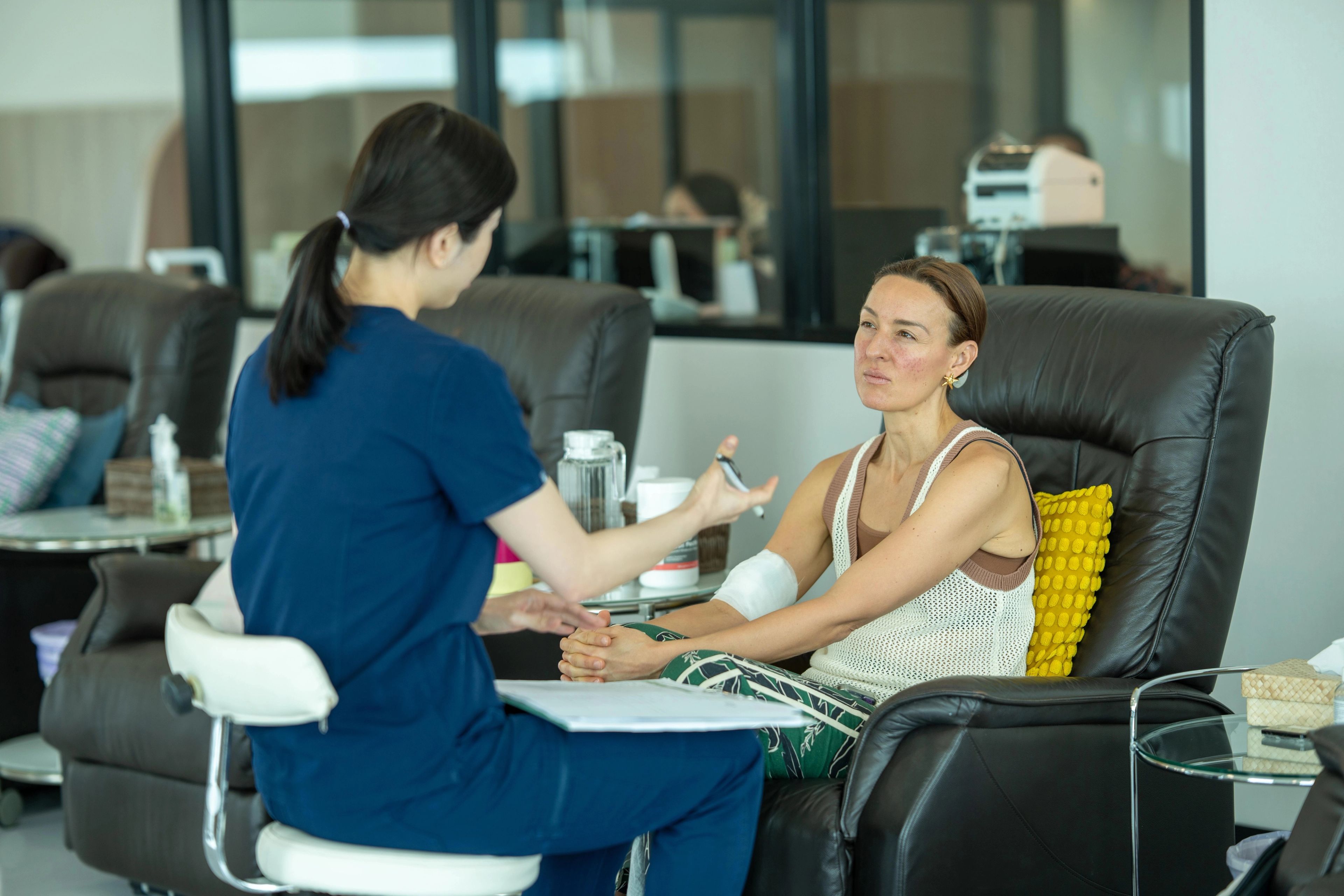
Patient sits in a black leather chair having a conversation with a medical professional in scrubs who is sitting in front of her.

Discuss your care with our team

A free consultation, no obligation.
Book a consultation