Skip to content

Nutrition · Guide · 7 min read

The Ketogenic Diet and Cancer

Looking for a natural way to support cancer treatment? Discover the benefits of the ketogenic diet and cancer.

Medically reviewed by Dr Abdulla El-Hossami, Group Chief Medical Officer · Sep 29, 2026Published Sep 3, 2021
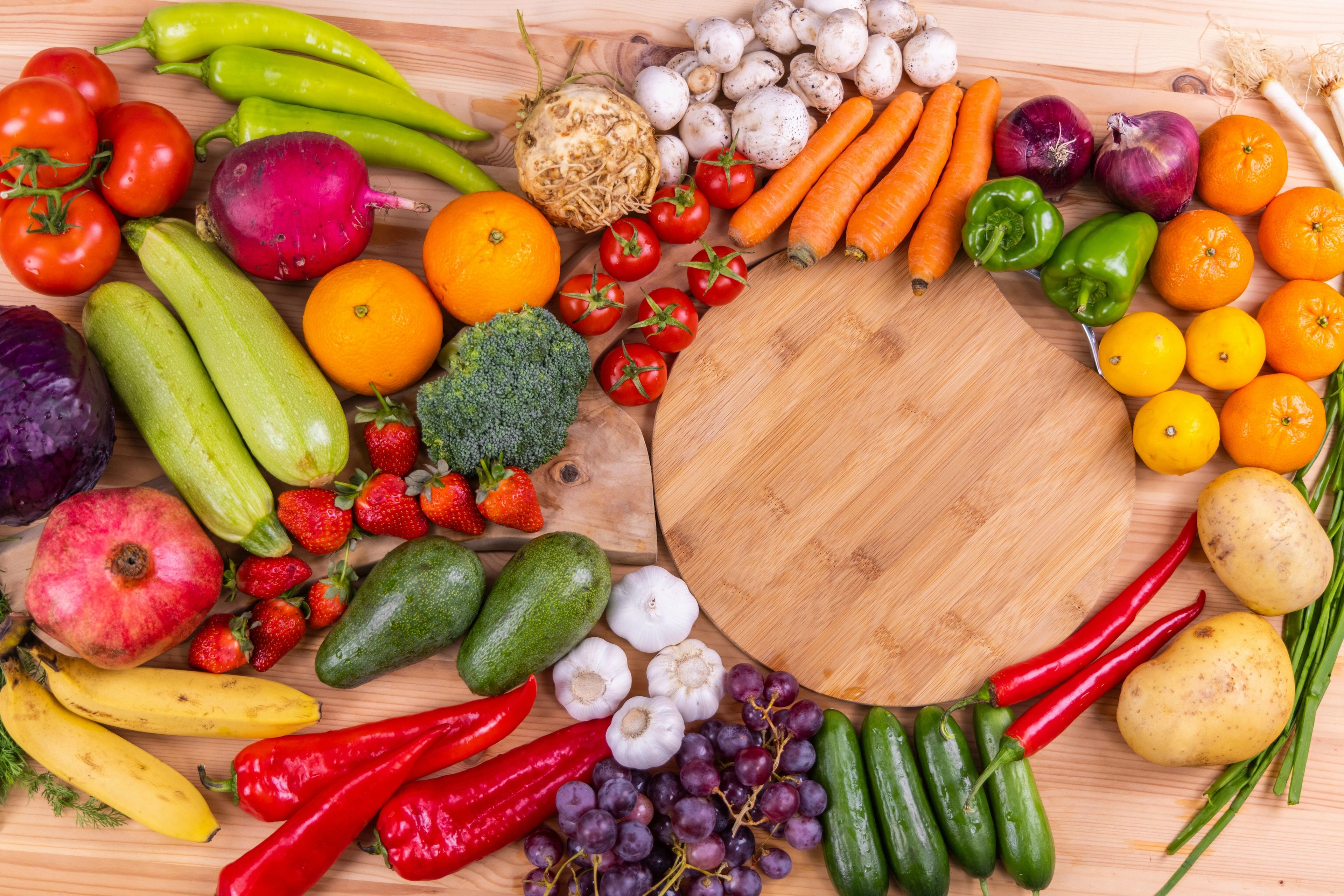
ketogenic meal

Cancer is a disease that affects millions of people worldwide. While conventional treatments like chemotherapy and radiation can be effective, many patients seek natural ways to support their treatment and improve their outcomes. In recent years, researchers have been investigating whether a ketogenic diet could have a complementary role in cancer care. The diet changes the body's energy metabolism by substantially reducing carbohydrate intake and increasing fat intake.

While the use of “ketogenic diet” has hit peak buzzword in health and fitness circles around the world, most people are still unaware of its origins and how it was initially developed back in the 1920s, as powerful method for treating epilepsy.

In recent years however, these findings have further evolved to encompass many other significant and chronic diseases, most notably cancer.

Under normal conditions, the body is in a state of glycolysis, which means that energy is sourced by burning glucose in the blood. As most of us know, this glucose is derived from carbohydrates. When carbohydrate intake is substantially reduced, the body produces more ketones from fat and increasingly uses fat and ketones as alternative energy sources. This metabolic state is known as ketosis.
Is the Ketogenic Diet Safe During Cancer Treatment?

Early clinical studies suggest that ketogenic diets can be tolerated by some people with cancer, but safety and suitability depend on the individual's health, cancer type, nutritional status and treatment. The diet can be restrictive and may contribute to weight or muscle loss in some patients. It should therefore be considered under appropriate medical or nutritional supervision.

At the University of Boston, Professor Thomas Seyfried has been leading research in this field for a number of years.

In his groundbreaking book, Cancer as a Metabolic Disease: On the Origin, Management, and Prevention of Cancer (Wiley, 1st ed., 2012) Seyfried argues that cancer can be best defined as a mitochondrial metabolic disease rather than as a genetic disease and that by altering the body’s metabolic environment, molecular pathology can effectively be neutralised.

Classically, the ketogenic diet is typically proportioned into 70% fat, 25% protein, and 5% carbohydrates. While some studies have reported potentially beneficial metabolic or clinical effects, the diet's strictness can also contribute to weakness, constipation and unintended weight or muscle loss in some patients.

the loss of muscle mass. It also a regime that is difficult to maintain, especially for those who may be already severely impaired through illness. Ketogenic diets can reduce body weight and fat mass in some settings. In cancer care, researchers are investigating whether these metabolic changes may have a useful complementary role, but the evidence is not yet sufficient to establish the diet as an effective cancer treatment.

A ketogenic diet has not been used in all typical clinical trials to starve cancer. The application is still at a hypothetical level. So, there is a need to design a safe, sustainable, and tolerable plan tailored to the individual patient’s requirements.

Ketogenic Diet at Verita Life Clinic

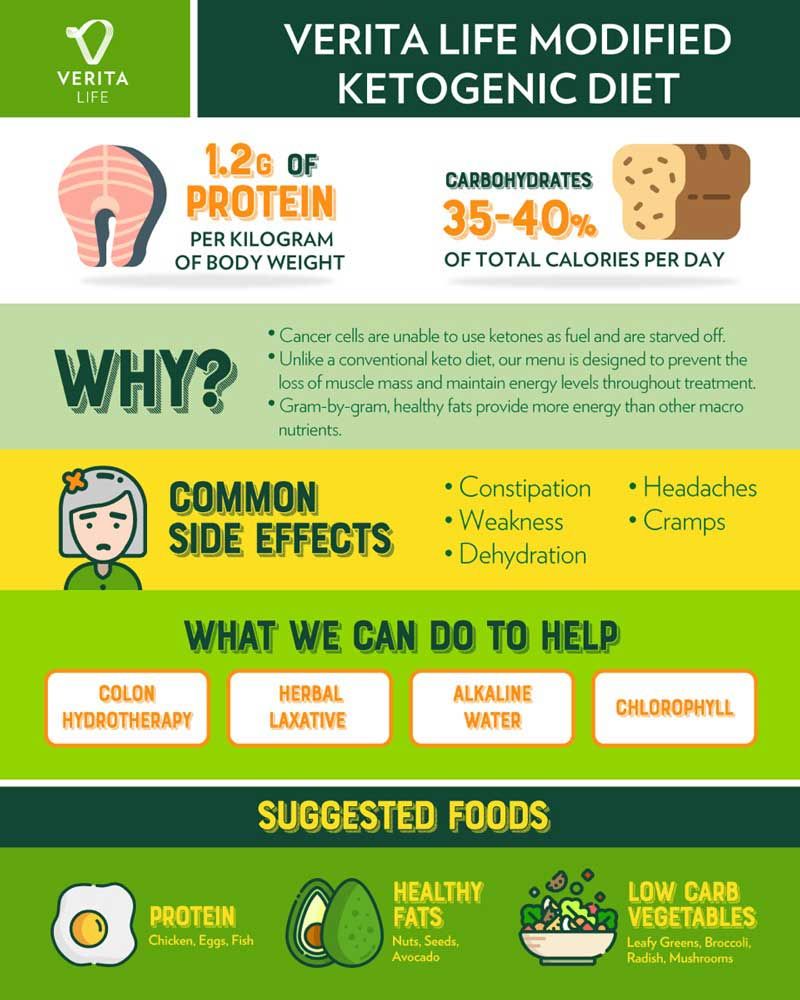
At Verita Life’s Integrative Cancer Clinics, a modified version of the Ketogenic Diet has been developed, which lessens the rate of muscle weakening, without providing cancer cells with any additional fuel. In short, the slightly higher rate of protein is allowed, and is calculated per patient’s body weight at a rate of 1.2 grams per kilogram.

“The most significant aspect of our modified Ketogenic Diet is that we tailor make the menu to each and every patient. No two patients are the same, they have different body weights, different cancers and will be at different stages in their cancer journey, so we must take every aspect into consideration”, says Verita Life Naturopath Dr Brian Kunakorn. “We do not subscribe to a one size fits all approach”.

For the patients at Verita Life clinics, the modified Ketogenic diet also helps them stay positive and well nourished throughout their integrative treatment programme. “I have to commend the cooks here as they make the food very palatable, very delicious and very easy to transition into”, says Dr Louis Grondin, a recent patient at Verita Life’s clinic in Baja, Mexico. “I’ve been here for six weeks and I have to say my energy level is almost back to normal, I exercise an hour a day, which I usually did before my diagnosis, I’ve put on weight and my BMI indicates that it’s mainly muscle mass, which is what I had lost prior to treatment. I’m feeling good”.

For all its benefits however, managing and maintaining the diet is not a “magic pill”, explains Dr. Kunakorn. “It takes time, dedication, and discipline and requires, for many, significant lifestyle changes and it also takes time for ones body to adapt. The first few days may be especially rough and most people will experience what is commonly known as ‘Keto-Flu’ which refers to fatigue, dizziness, irritability, sugar cravings, and nausea. This is an indication that the body is adjusting to the absence of carbohydrates. Staying motivated and disciplined is crucial”.

What Is the Ketogenic Diet Cancer Patients Can Consume

A typical keto diet is high in fat and low on carbs; and an adequate amount of protein.

This diet can sensitize most cancers to standard treatments by exploiting the

reprogrammed cancer cells’ metabolism. It makes the diet a promising candidate as an

adjuvant cancer therapy.

Ketogenic diet cancer food list

Foods that make it to the ketogenic diet list are

  • Fish and seafood
  • Low carb veggies
  • Cheese
  • Avocados
  • Poultry
  • Eggs
  • Nuts, seeds, and healthful oils
  • Plain and Greek yogurt and cottage cheese.

Ketogenic Diet Helpful in Many Ways

Studies have shown that when cancer patients follow the ketogenic food list, the diet

may work in several ways like

  • Slow tumor growth
  • Protect healthy cells from damage during radiation therapy or chemotherapy.
  • Help anti-cancer drugs work faster and better.
  • Ease inflammation which can encourage cancer growth
  • Assist in preventing weight gain during and after chemotherapy for breast cancer.

Yes, following this diet can help you heal from cancer faster. Nonetheless, it is not a balanced diet as per standard practice. You should know what a ketogenic diet is and how to make it more balanced. It will help you to prevent other disorders after adhering to a somewhat imbalanced diet. You can properly plan a keto diet and make it healthy too. You can follow these tips for this.

  • Do not get stuck in a rut but make the diet more variable by consuming different
  • foods daily.
  • Maximizing your carbs is essential, so make them nutrient dense. Avocado and nuts
  • are a better choice than a cookie here.
  • Do not forget to focus on the quality of food. Try to buy more organic food.
  • Use diverse fats to add variety. It will not bore you and also give you the required
  • nutrients.
  • Measure your foods in the initial stages to adhere to the high fat, low carb, and
  • moderate protein formula for every meal.

Verita life modified ketogenic diet

To learn more about Verita Life or to get in touch, contact

us.

Verita Life ketogenic diet infographic
Share

Related on this site

Further reading

Nutrition

Foods That May Help Reduce Lung Cancer Risk

Explore foods and nutrients that may be associated with a lower risk of lung cancer, including broccoli, onions, garlic, green tea, fish and other nutrient-rich foods. Learn what research suggests about diet and lung cancer risk, and why a healthy overall diet is part of a broader approach to cancer prevention.

6 min read

Nutrition

The Importance of Nutrition in the Fight Against Cancer

Nutrition plays an important role during cancer treatment, supporting strength, energy, recovery and overall wellbeing. Learn how a balanced, nutrient-rich diet can help support the body throughout cancer care.

4 min read

Nutrition

Beneficial Juicy Fruits for Cancer Patients

When being treated for malignant growth, your food decisions are extraordinarily significant. Disease therapies like chemotherapy and radiation can cause many secondary effects, which can be either deteriorated or improved by what you eat and drink.

5 min read

Patient sits in a black leather chair having a conversation with a medical professional in scrubs who is sitting in front of her.

Talk to the care team

A free consultation about your situation, by phone, WhatsApp, or video.

Book a consultation